
Local SEO in Virginia Beach, VA: What It Takes to Show Up First in 2026
Virginia Beach is part military town, part beach tourism, and part sprawling residential city. Those three identities create radically different search behaviors depending on where a customer is and what time of year it is. Here's how to rank across all of them.
Kevin started his pressure washing and exterior cleaning business in Great Neck in 2018. His customer base was solid: homeowners in Alanton, Bay Colony, and the neighborhoods around First Landing State Park. He did good work, his repeat rate was high, and he stayed busy from April through October without advertising.
The problem hit him in spring 2023 when he tried to expand toward the Oceanfront corridor and the North End. He knew the work was there. Every spring, seasonal rental properties, vacation homes, and hotels needed exterior cleaning before summer season opened. But when he searched for his own service keywords from a phone in that part of the city, he was nowhere in the results. A newer company based near 19th Street, with fewer reviews and a one-year-old profile, was in the top three.
Kevin had built his GBP around his home address in the Great Neck area. His reviews referenced neighborhoods in his existing coverage zone. His website mentioned Virginia Beach generally but had no content specific to the Oceanfront, the resort area, or the beach neighborhood corridor.
The Oceanfront business did not know Kevin existed. And Google had no reason to show Kevin to someone searching from 17th Street.
Why Virginia Beach Creates Unique Local SEO Challenges
Virginia Beach is a large city that simultaneously operates as three distinct markets. Understanding which market you are targeting, and that search behavior is different in each, is the prerequisite for doing anything else right.
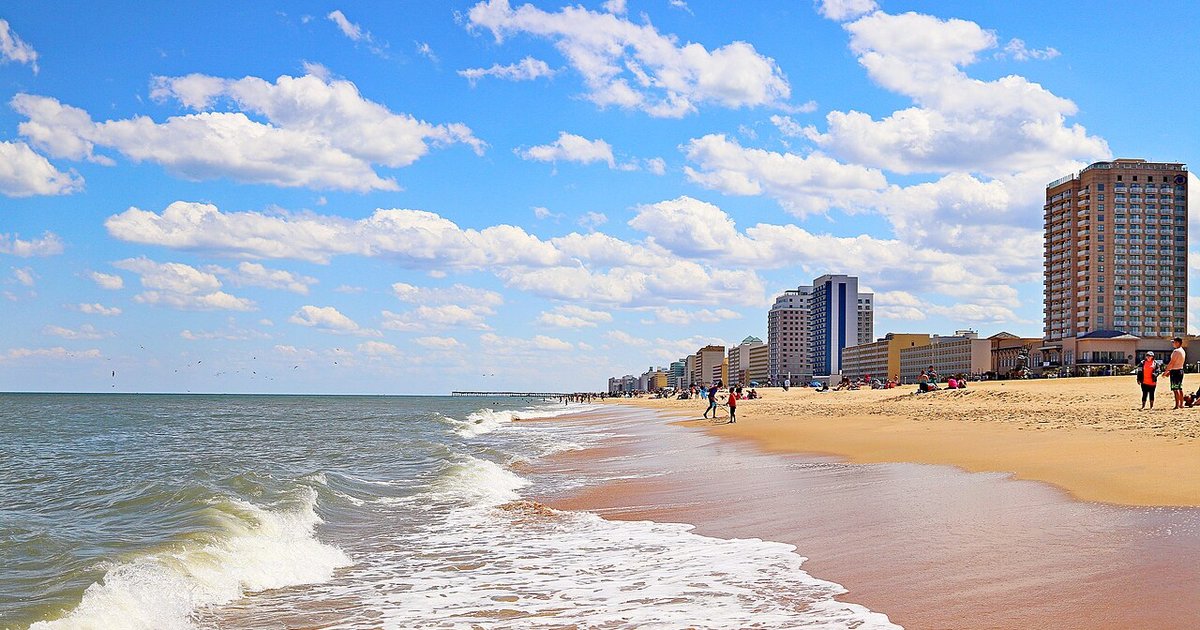
The resort area and Oceanfront corridor runs from Rudee Inlet to the North End. This market is heavily influenced by tourism from late spring through Labor Day. Search volume for many categories spikes 200 to 400 percent during peak season. But the searchers are often tourists, seasonal renters, or visitors who are not your ideal long-term customer. The businesses that rank well here have learned to balance visibility for seasonal searchers with the retention signals that carry them through the off-season.
The military corridor anchors the western and central parts of the city, including areas around NAS Oceana and the neighborhoods that house Naval Station Norfolk overflow. This population is large, transient in the way military communities are, and high-frequency searchers for service providers. PCS arrivals do not know anyone and need everything. A plumber, a dentist, a car mechanic, a lawn care company, a gym. They search, they read reviews, and they build their vendor list fast after arriving.
The residential interior spans the western reaches of the city, from Kempsville through Centerville and the suburban neighborhoods extending toward the Chesapeake line. This is the most stable part of the market, the lowest search volume per capita, and also the lowest competition. A well-run service business in this zone can own the local pack in its categories with a fraction of the effort required in the resort corridor.
The geographic size of Virginia Beach amplifies all of this. The city is 249 square miles, one of the largest in the Eastern US. A business in Kempsville and a business at the Oceanfront are about 18 miles apart. Google treats them as serving fundamentally different customer pools.
Compare this to Norfolk, which is geographically compact and has a more uniform search environment. And Richmond, which is also large but has a more clearly defined neighborhood structure that makes geographic targeting more predictable. Virginia Beach's three-market character is its own challenge.
The 3 Ranking Factors That Matter Most in Virginia Beach
Whitespark's Local Search Ranking Factors research identifies the signals that move rankings. In Virginia Beach's multi-character market, three factors have outsized influence.
1. GBP Completeness with Seasonal Accuracy
Virginia Beach businesses make a specific mistake that tanks their local rankings: they set their hours for one season and never update them. A business that reduces hours dramatically in November but still shows summer hours on their GBP is signaling to Google that their profile is unmanaged. Google's freshness and accuracy signals respond to this by reducing confidence in the listing.
Update your hours for every season change. If your beach-adjacent business closes for the winter, mark it correctly. If you expand hours for summer, update them the week before. Google's data freshness signals reward profiles that stay accurate.
Beyond hours, Virginia Beach GBPs need complete service area documentation. Given the city's geographic spread, a service business's coverage zone often crosses dramatically different market types. A home services business that covers both Kempsville and the North End has a service area that spans nearly 20 miles and touches both the military residential market and the resort-adjacent market. This range needs to be documented in the service areas field and reflected in the website content.
The primary category selection also matters here in ways specific to Virginia Beach. For businesses in the resort corridor, the temptation is to pick a broad category that captures tourist searches. For businesses serving primarily the military residential market, the temptation is to lean into categories that emphasize speed and accessibility. Choose the category that best describes what you primarily do and add secondary categories for the adjacent services.
2. Review Velocity That Accounts for Seasonality
Virginia Beach's seasonal character creates a review velocity challenge. A restaurant or service business at the Oceanfront may naturally generate 25 reviews per week in July and zero new reviews in January. That seasonal flatline looks exactly like a dying business to Google's freshness signals.
The BrightLocal Local Consumer Review Survey shows that Google weighs recent reviews heavily in ranking calculations. A review surge in summer followed by months of silence actively hurts off-season rankings. This is critical for a market where some businesses depend on off-season residential customers to survive.
The solution is a deliberate off-season review strategy. During summer, you capture tourist and seasonal reviews naturally. During the off-season, you need to systematically work through your residential customer base. They gave you permission to ask by hiring you. A well-timed email or text campaign to your existing customer list during October and November, specifically when winter is quiet but people are thinking about home maintenance, generates the steady off-season reviews that maintain your ranking through February and March.
For businesses serving the military community, the PCS cycle creates natural moments. Families who are moving out in June are still accessible for review requests in May. Families who arrived in July and hired you over the summer should be asked in September, when they have settled in and are more likely to write thoughtful reviews.
3. Citation Consistency Across Hampton Roads Directories
Virginia Beach is part of the Hampton Roads metro, which includes Norfolk, Chesapeake, Newport News, Hampton, and Portsmouth. National directory and aggregator data often groups businesses across this metro in inconsistent ways. A Virginia Beach business might appear as "Hampton Roads" on some directories, "Norfolk metro" on others, and "Virginia Beach, VA" on the ones that have it right.
This inconsistency in your NAP data creates the same trust problem it does in every market: Google sees conflicting signals about where you are and becomes less confident in surfacing you for local searches in your actual location.
Run a citation audit across the major aggregators and correct any Hampton Roads or Norfolk metro city misclassifications. Data Axle, Localeze, and Neustar feed most secondary directories. Fix it there and it propagates. Then audit your direct listings on Yelp, Angi, HomeAdvisor, and the tourism directories like TripAdvisor and Virginia Beach's tourism-affiliated local directories, which carry weight for resort corridor businesses.
The Mistakes Virginia Beach Businesses Make Most Often
Leaving hours stale through season changes. This is the most common and most damaging error in a seasonal market. Set a calendar reminder to update your GBP hours at the beginning of each season. Google has started proactively flagging businesses with potentially inaccurate hours, which further depresses rankings.
Not capturing summer reviews systematically. Summer is when your review pipeline should be running at maximum efficiency. Every service delivery, every restaurant visit, every transaction should have a review request attached. The reviews you capture in July and August carry your ranking into October. Businesses that coast through summer and then scramble for reviews in September have the cause and effect backwards.
Targeting "Virginia Beach" as a monolithic market. As described above, the Oceanfront and Kempsville and the military corridors are different markets with different search behaviors. Generic Virginia Beach content without specificity to these zones performs poorly across all of them.
Ignoring the Hampton Roads directory ecosystem. Virginia Beach businesses that only audit the national directories miss the regional Hampton Roads publications, community sites, and neighborhood directories that carry local authority signals. The local newspaper sites, community Facebook groups converted to citation sources, and regional business associations all contribute to your local link and citation profile.
Treating tourism reviews the same as resident reviews. A business at the Oceanfront that gets 100 tourist reviews in summer should not confuse this with having a strong resident reputation. Tourist reviews help summer rankings. Resident reviews, from people in Virginia Beach neighborhoods, drive year-round residential search visibility.
Month-by-Month Timeline to Ranking in Virginia Beach
Month 1: Audit and Foundation (Assume Starting in January)
Audit your GBP for seasonal accuracy. Update hours to your current operating hours. Complete every empty field. Write a business description that names the specific Virginia Beach zones you serve, not just "Virginia Beach." Upload ten to fifteen photos, including photos that reflect your off-season service reality, not just summer visuals.
Begin your citation audit. Flag every listing with Hampton Roads or Norfolk metro misclassification and queue up corrections.
Month 2: Citation Correction and Review Strategy
Submit corrections to the major aggregators. Correct direct listings. Build your off-season review campaign. If you have a customer email list, segment it by the customers who hired you in the past six months who have not yet left a review, and send a brief, direct request.
Month 3: Geographic Content Build
Write service area pages or expand your existing content to address the different Virginia Beach markets you serve. A home services business should have content that specifically addresses the resort area homeowner, the military family, and the western residential homeowner, because their situations and needs are genuinely different. This is not keyword stuffing. These are real differences that make your content more useful and more relevant.
Month 4: Seasonal Prep (Spring)
April is when the resort corridor starts activating. Your GBP hours should be updated to your spring and summer schedule by April 1. Launch your summer review acquisition process. Make sure your photos include fresh spring content, not just the winter stock from before.
GBP posts become more important in April through September. Two to four posts per month during peak season, mixing seasonal offers with service spotlights and community references, drives the engagement signals that contribute to visibility.
Month 5: Peak Season Execution
May through August is when you capture the review volume that carries you through winter. Every customer interaction should be followed by a review request, same day or next day. The tourist market is not your long-term audience but their reviews contribute to your overall ranking signal.
Monitor your rankings weekly during peak season. If a competitor is gaining on you in a specific zone, address it immediately rather than waiting until September.
Month 6: Transition and Winter Prep
September and October. Update your hours as the season winds down. Launch your off-season review campaign targeting the residential customer base from the past twelve months. Update your GBP to reflect any changes in your fall and winter service menu. If you have a significantly reduced off-season service offering, document it clearly so customers know what to expect.
Frequently Asked Questions
How do I rank for both the tourist market and the residential market at the same time?
You generally cannot optimize a single GBP for both with equal effectiveness. The tourist market searches with vacation-context terms. The residential market searches with long-term service relationship context. The businesses that do it best are ones that have a primary category and description anchored in their year-round residential service, and then layer seasonal content through GBP posts and specific landing pages that capture the tourist search terms when summer search volume peaks.
Does the NAS Oceana closure announcements over the years affect local SEO considerations around military personnel?
NAS Oceana is still operational and continues to generate a substantial military population in the surrounding neighborhoods. The base community is an active, high-search-frequency customer pool for every service category. Explicitly mentioning service to military families in your GBP description and website content is worth doing if you serve that community, because it resonates with the prospects reading your profile.
Should I optimize separately for Virginia Beach and Chesapeake since I serve both?
If you serve both cities and each represents a meaningful portion of your revenue, you need separate location or service area pages for each on your website. Google treats Virginia Beach and Chesapeake as distinct markets. A Virginia Beach GBP is not the right tool for capturing Chesapeake searches. Depending on your business model, a separate Chesapeake address may be warranted.
How long does it take to rank in Virginia Beach compared to Richmond or Norfolk?
Richmond has a more mature competitive landscape in service categories, particularly in its core neighborhoods. Norfolk is geographically compact and competitive near its commercial core but thinner in residential categories. Virginia Beach, because of its size, has pockets of genuinely low competition in its residential interior, where a well-set-up business can rank within 60 to 90 days. The resort corridor takes longer because it has more competition and the seasonal review dynamics are more complex.
My business is in the Oceanfront area but my customers are mostly residential Virginia Beach locals, not tourists. How do I signal that?
Your address will help you rank for Oceanfront and resort corridor searches naturally. The question is how to also capture residential searches from customers further inland. This requires service area documentation that explicitly extends your coverage zone into the residential neighborhoods, website content that addresses the resident audience rather than the tourist audience, and reviews that come from resident customers in the neighborhoods you serve. Proximity from your Oceanfront address handles part of this, but content and review geography have to fill the gap.
I have a seasonal business that closes from November through February. Will my GBP get penalized?
Not if you handle it correctly. Mark your business as temporarily closed with accurate dates, not just change the hours to zero. A temporarily closed business in good standing returns to ranking when it reopens. A business that shows conflicting hours or appears abandoned can see ranking drops that take months to recover from after reopening. Use the temporary closure feature properly, then set a reminder to reactivate with updated hours and a batch of GBP posts before your season opens.
What's the best starting point if I'm not sure where my Virginia Beach SEO stands?
Run a free audit. The audit shows you, by zone and search term, where you currently appear and where the gaps are. Given Virginia Beach's multi-character market, the audit often surfaces surprising things, including that a business is invisible in one zone of the city while ranking well in another, without ever knowing why.
Virginia Beach is not a simple market. It rewards businesses that understand its layers and build a presence that addresses each one. The seasonal character creates both challenges and opportunities. The military population is a high-frequency customer source that rewards good service and review-worthy experiences. The residential interior is often underserved because everyone is focused on the Oceanfront.
The businesses that build durable ranking positions here are the ones that treat the seasonal dynamics as a planning input rather than an excuse. They stay active in the off-season. They capture reviews year-round. They build content that speaks to the different customer types across the city.
See how Virginia Beach's multi-zone approach compares to our local SEO strategy in Norfolk, and for a comparison to another large Virginia market, see our Richmond work.
Charles Lau
Founder, Formula Won Labs
Charles Lau is the founder of Formula Won Labs, an AI visibility infrastructure company that helps local businesses rank on Google Maps and get recommended by AI platforms. He works with home service companies, med spas, dental practices, and other local businesses across the US.