
Google Maps SEO: How to Rank Higher on Google Maps
Google Maps SEO is the practice of optimizing your business to rank higher in Google Maps results and the local pack. Here is how it works, what signals Google uses, and what actually moves your ranking.
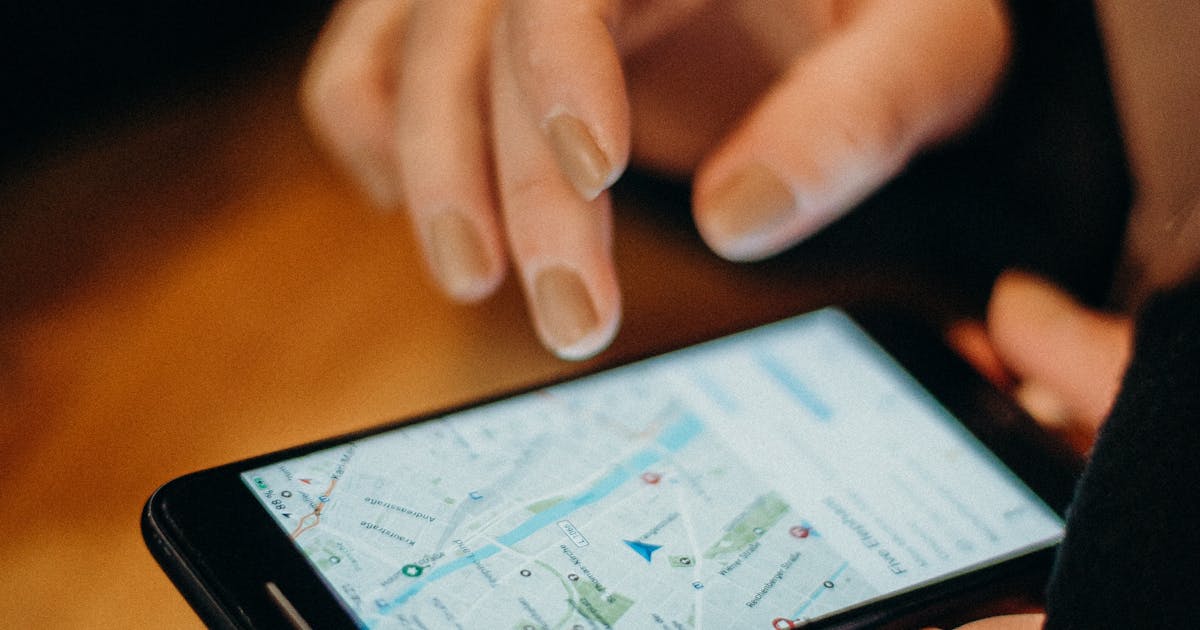
Google Maps is where local customers decide who to call. When someone searches for a service in their area, the businesses that appear in the top 3 on Maps get the majority of the calls, direction requests, and website visits. Everyone below them gets the remainder.
Google Maps SEO is the practice of optimizing the signals that determine where you rank in those results. It is a distinct discipline from traditional website SEO, with different signals, different tactics, and for local service businesses, often higher direct ROI.
How Google Maps ranking works
Google Maps rankings are driven by three factors: relevance, distance, and prominence. Google has confirmed this publicly, and understanding each one tells you exactly where to focus your optimization effort.
Relevance is whether your business matches what the searcher is looking for. Your Google Business Profile primary category is the strongest relevance signal. A business with "Plumber" as its primary category ranks for plumbing searches. One with "Home Services" ranks more broadly but less specifically. Secondary categories, your services list, and keywords in your business description all contribute to relevance.
Distance is how close your business is to the searcher. Google uses real-time device location for "near me" searches and inferred location for city-based searches. Distance is the one factor you cannot directly optimize - but you can partially offset a distance disadvantage with stronger relevance and prominence signals.
Prominence is how established and trusted your business is. This is built from review count and recency, citation consistency, website authority, and the overall volume and quality of information Google has about your business. Prominence is where most businesses have the most room to improve - and where consistent work over time pays the largest dividends.
The signals that move your Maps ranking
Google Business Profile completeness and activity
Your GBP is the foundation of Maps ranking. Google rewards complete, accurate, and actively managed profiles.
Primary category is the most impactful single field. Set it to the most specific category that accurately describes your core service. Check what the top 3 businesses in your local pack use - Google rewards the categories it already associates with top-ranked businesses in your space.
Services list expands your eligible searches. Every service you list explicitly becomes a potential search match. A dentist that lists "dental implants" separately ranks for "dental implant dentist near me." One that only lists generic "dental services" does not.
Business description gives Google a text source for relevance signals. Write it clearly, include your primary service and location, and describe what makes your business worth calling. Do not keyword-stuff - write it for the customer.
Posting frequency signals an active business. A profile that posts weekly outranks an equivalent profile that never posts. Posts can be service highlights, seasonal offers, recent work photos, or customer tips.
Photo activity contributes to engagement signals. Profiles with more photos - and recently added photos - receive more profile views and direction requests. Add new photos regularly, not just during setup.
Review count and velocity
Review velocity is the most reliable ranking lever for most local businesses. In competitive markets, the top 3 Maps positions are almost always held by the businesses with the most active review profiles - not necessarily the oldest or most established businesses.
What matters:
- Total count relative to competitors - if the #1 business in your market has 120 reviews and you have 22, that gap is a primary ranking constraint
- Recency - Google weights new reviews more heavily than old ones; a business getting 8 reviews per month outranks a business with 100 old reviews and none recent
- Rating - higher average rating is better, but a 4.7 with 80 reviews beats a 5.0 with 11 reviews
Build a review system that asks every customer within 24 hours of service completion, sends a direct link, and follows up once. The businesses with the most reviews are not getting them by luck - they have a process.
Citation consistency
Citations are mentions of your business name, address, and phone (NAP) across the web - Yelp, Apple Maps, Facebook, industry directories, and hundreds of other sites. Google cross-references these to confirm your business is real and operating where you claim.
Inconsistencies - an old address, a slightly different business name, a different phone number - create conflicting signals that suppress your ranking. Citation cleanup is foundational work that often produces immediate ranking lift once completed.
Priority citation sources: Google Business Profile, Yelp, Apple Maps, Facebook, Better Business Bureau, industry-specific directories for your vertical. Consistency across these sources carries more weight than volume across hundreds of low-quality directories.
Website signals
Your website is not the primary ranking signal for Google Maps, but it matters as a legitimacy and relevance corroboration. Google checks whether your website:
- Matches the business name and address on your GBP
- Contains content relevant to your GBP categories
- Loads quickly (Core Web Vitals are a signal)
- Has a clear local presence (city/region in title tags, local phone number, address in footer)
A mismatch between your website and your GBP - different business name, different address, different services - creates conflicting signals that hurt Maps ranking. Consistency across both is the goal.
What does not work for Google Maps SEO
Keyword-stuffing your business name. Adding keywords to your GBP business name ("Dallas Plumber - Joe's Plumbing") is against Google's guidelines and triggers profile suspension. Use your actual business name.
Buying fake reviews. Google detects patterns in review behavior and removes fake reviews. Businesses that rely on fake reviews end up with suspended profiles and no reviews at all. Build real ones.
Creating multiple GBP listings for the same location. Duplicate listings get merged or removed, not ranked higher. One accurate, well-managed profile outranks multiple low-quality ones.
One-time optimization without maintenance. Google rewards ongoing activity. A perfectly optimized profile that goes dormant drops in ranking over time. Maps SEO is a continuous discipline, not a one-time project.
The compound effect over time
The businesses that dominate Google Maps in their markets did not get there overnight. They built their position through months of consistent work - reviews accumulating, posts publishing, citations cleaning up, photos adding up. Each individual action is small. The compound effect over 6 to 12 months is substantial and increasingly hard for competitors to displace.
A business that starts Google Maps SEO today and maintains consistent effort for 12 months will be in a fundamentally different competitive position than one that does nothing - or than one that does it inconsistently.
Get a free local SEO audit to see where you rank across your service area on a geo-grid and exactly what the gap is between your current position and the top 3.
Related: How Google Decides Who Gets the Top 3 Spots on Maps | What Is the Local Pack? | Google Business Profile Optimization Guide | Local SEO Services
Charles Lau
Founder, Formula Won Labs
Charles Lau is the founder of Formula Won Labs, an AI visibility infrastructure company that helps local businesses rank on Google Maps and get recommended by AI platforms. He works with home service companies, med spas, dental practices, and other local businesses across the US.