
Near Me SEO: How to Show Up When People Search for a Service Near Them
"Near me" searches have surged for a decade and they are still growing. Here is what actually determines whether your business shows up for them.
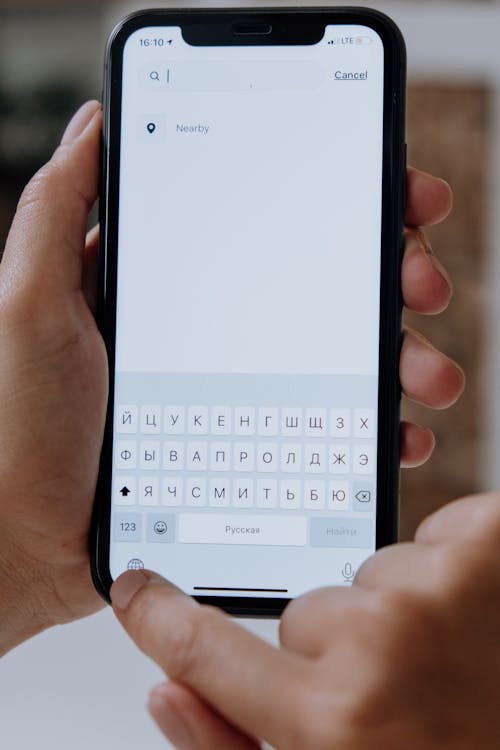
"Near me" searches have grown year over year for more than a decade. People have stopped typing city names and zip codes. They let their phone figure out where they are and search for what they need right now.
"Emergency plumber near me." "HVAC repair near me." "Dentist open near me."
The businesses that show up for these searches get the call. The ones that don't, don't. This is a guide to the signals that actually determine which category you fall into.
What Google is actually doing when you search "near me"
When someone types "plumber near me," Google runs three simultaneous evaluations:
Proximity. How close is this business to the person searching? Google uses the searcher's real-time location, pulled from their device. Businesses closer to the searcher have a significant advantage, all else being equal.
Relevance. Does this business actually do what I'm looking for? Google looks at your GBP categories, services, business description, website content, and review text to determine relevance.
Prominence. Is this a business Google can trust? Review count, review recency, citation consistency across directories, and overall online presence all feed into prominence.
The result of all three evaluations is the local pack - the three businesses that appear above organic results for that search. In cities, this competition is intense. In rural areas, just having a complete, active profile is often enough.
Proximity: the signal you can't fully control
Your physical address or configured service area is the anchor Google uses for proximity calculations. If someone searches "plumber near me" from five miles away and your competitor is two miles away, they have a structural advantage on proximity.
What you can do:
Configure your service area accurately. If you're a service area business (you go to customers, not the other way around), set your service area in your GBP to cover the actual geography you serve. Google uses this to determine whether you're relevant for searches in those areas.
Use your address strategically. If you have a choice of business address - a home office in the suburbs vs. a commercial address closer to your main service area - the address closer to your customers performs better. This matters most in cities.
Don't try to game proximity. Virtual office addresses and fake locations are against Google's guidelines and routinely get listings suspended. The risk is not worth it.
Relevance: the signal you have the most control over
This is where most businesses underperform, and where the most improvement is available quickly.
Primary category. The single most important relevance signal. Your primary category must be the most specific description of your core service. "Plumber" beats "Home Services." "Emergency Plumber" beats "Plumber" if emergency service is your primary offering. The right category can move you from invisible to the local pack in days. It's the first thing to audit.
Secondary categories. Add every service you genuinely offer. An HVAC company that also does water heater installation should have that as a secondary category - customers searching for water heater repair near them become findable.
Services section. Fill this out completely with specific service names. "Residential Drain Cleaning," "Sewer Line Repair," "Emergency Leak Detection" - not just "Plumbing." The services section feeds into Google's relevance matching.
Website content. Google checks your website. Pages that clearly describe what you do, for whom, and where you serve - without keyword stuffing - reinforce your GBP relevance signals. A well-structured local SEO presence covers both the GBP and the website together because they work as a system.
Review text. When customers mention specific services and locations in their reviews ("They fixed my broken pipe in Scottsdale same day"), that text adds to your relevance profile. You can't write their reviews, but you can ask customers to be specific when they leave feedback.
Prominence: how Google judges your credibility
Proximity and relevance get you considered. Prominence determines whether you rank above your competitors.
Reviews. The most impactful prominence signal after categories. Total count, average rating, and velocity (how recent your reviews are) all matter. A business with 80 reviews and a 4.7 average consistently outranks a business with 20 reviews and a 4.9 average in most markets. Getting 4 to 8 new reviews per month is the target that moves rankings.
Citation consistency. Your business name, address, and phone number appearing consistently across directories (Google, Yelp, Facebook, Apple Maps, industry directories) tells Google your business is legitimate and stable. Inconsistencies - old addresses, name variations, different phone numbers - create confusion and hurt prominence.
GBP activity. Active profiles outrank inactive ones. Posting at least weekly, uploading new photos regularly, and keeping your profile updated signals to Google that your business is current and engaged. An unmanaged profile that has not posted in months looks dormant.
Backlinks. Links from local websites - local news outlets, chamber of commerce, industry associations, other local businesses - build authority. This is lower-priority than reviews and citations for most businesses, but it matters in competitive markets.
The near me ranking playbook for local businesses
In order of impact:
- Verify your GBP is claimed and verified. If it's not, stop everything and do this first.
- Fix your primary category to the most specific match for your core service.
- Complete your service area configuration if you're a service area business.
- Build out your Services section with specific, searchable service names.
- Generate 4 to 8 new reviews per month through a consistent ask process.
- Post 3 times per week - photos of completed work, updates, offers.
- Check citation consistency across Google, Yelp, Facebook, Apple Maps, and your top 3 industry directories.
- Build service area pages on your website for neighborhoods and cities where you want to rank.
Steps 1 through 4 are setup. Steps 5 through 8 are ongoing. The businesses that dominate near me searches in competitive markets are executing steps 5 through 8 every month, consistently, for years. That consistency is the actual competitive advantage.
Service area pages: the website layer
Most discussions of near me SEO focus exclusively on GBP. But for businesses trying to rank in multiple areas - not just the immediate vicinity of their address - website content matters.
A service area page for "plumbing services in [City]" that genuinely covers that city's service area, includes local specifics, and has real content (not just swapped city names) helps Google understand your geographic relevance.
Done poorly (just switching city names on a template page), these pages don't help and can hurt. Done well, they extend your near me visibility into areas where proximity alone doesn't get you there.
A free local SEO audit will show you where your current near me visibility ends - which areas you're ranking in, which you're not, and what the gap looks like.
Related: Local SEO in 2026: What Actually Moves the Needle | How Google Decides Who Gets the Top 3 Spots on Maps | Local SEO Services
Charles Lau
Founder, Formula Won Labs
Charles Lau is the founder of Formula Won Labs, an AI visibility infrastructure company that helps local businesses rank on Google Maps and get recommended by AI platforms. He works with home service companies, med spas, dental practices, and other local businesses across the US.