
Google Maps vs Apple Maps: Where Your Customers Actually Find You
Google Maps dominates search. Apple Maps dominates iPhones. Here is how each platform works, which customers use each one, and what you need to do to show up on both.
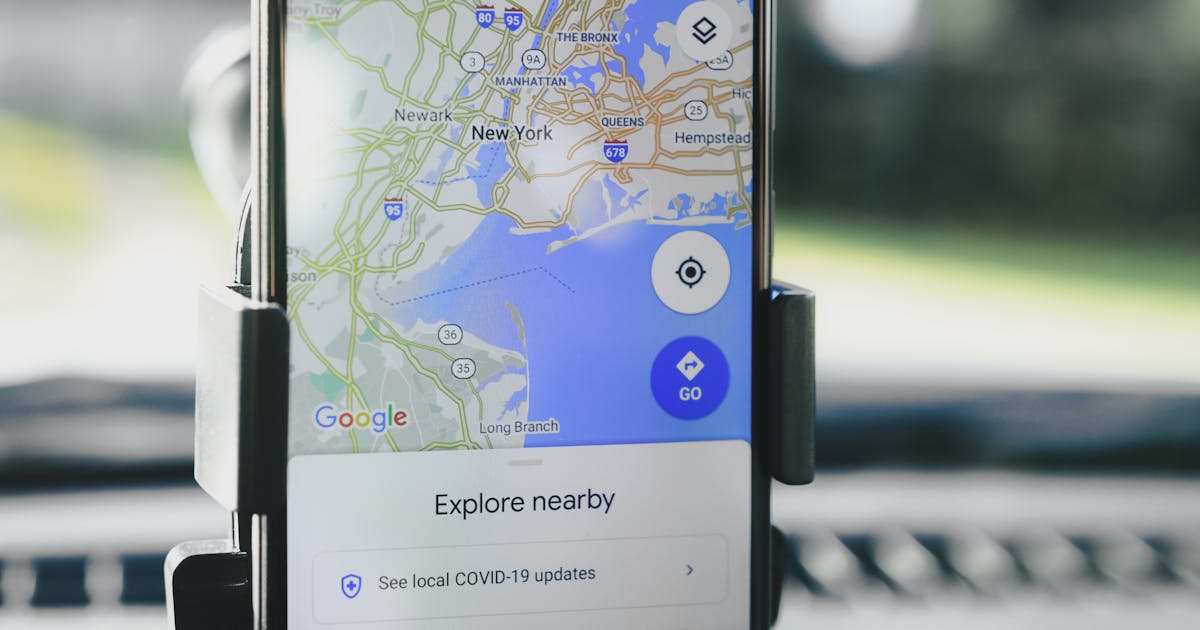
When a customer searches for a restaurant, a plumber, or a physical therapist on their phone, two platforms dominate what they see: Google Maps and Apple Maps. Most local business owners know they need to show up on Google. Fewer realize that Apple Maps operates on entirely different data and that being invisible there means being invisible to a significant portion of their potential customers.
Here is how each platform actually works, who uses each one, and what you need to do to show up on both.
The Market Share Reality
Google Maps is the dominant map search platform by a wide margin, accounting for roughly 70% of map-based searches. It benefits from being the default on every Android device and from deep integration with Google Search. When someone types "coffee shop near me" into Google on any device, the map pack results pull from Google Maps data.
Apple Maps claims the remaining share, but that share is concentrated in a high-value segment. Apple Maps is the default on every iPhone, iPad, and Mac. More importantly, it powers every Siri query and every navigation request through CarPlay. In the United States, where iPhone market share sits around 55-60%, that is not a niche audience.
The practical implication: Android users almost exclusively use Google Maps. iPhone users are split, with many using Google Maps by choice, but Apple Maps being the automatic fallback for Siri, CarPlay, and any app that pulls map data through iOS.
How Each Platform Surfaces Businesses
The two platforms use completely different data sources and ranking signals.
Google Maps
Google Maps business listings are managed through Google Business Profile (GBP). Google ranks businesses in the local map pack based on three core factors:
- Relevance: How well your business category and profile information matches the search query
- Distance: How close your business is to the searcher's location or the location they specified
- Prominence: Reviews, ratings, backlinks, engagement signals, and how well-known Google believes your business to be
A complete, accurate, and active GBP is the foundation. Reviews are the single most visible ranking and trust signal after that.
Apple Maps
Apple Maps pulls business data from multiple sources: Apple Business Connect (the official owner portal), Yelp (for reviews and supplemental business data), Foursquare and other data aggregators, and user-contributed edits. Apple's ranking algorithm is less publicly documented than Google's, but business completeness, ratings, and category accuracy all play clear roles.
The key thing to understand: these are separate systems. A verified, optimized Google Business Profile does nothing for your Apple Maps listing. You need to manage each one independently.
The AI Search Angle
This is where it gets more consequential than most local business owners realize.
Siri uses Apple Maps data to answer location-based questions. When someone says "Hey Siri, find me a Thai restaurant nearby," Siri surfaces businesses from Apple Maps. If your listing is unclaimed, incomplete, or missing, you will not appear in those results.
Apple Intelligence, Apple's broader AI layer rolling out across iOS and macOS, also draws on Apple Maps for local recommendations. As AI assistants become the primary way people ask questions, the underlying data source matters more, not less.
On the Google side, Google's AI Overviews increasingly surface local business information. ChatGPT (which uses Bing for search results) pulls from Microsoft's local data, which includes Bing Places and data aggregators. This is a separate consideration, but consistent NAP data across all platforms strengthens your presence everywhere.
What to Do for Each Platform
For Google Maps
- Claim and verify your Google Business Profile at business.google.com
- Select the most specific primary category available for your business type
- Fill in every field: hours, phone, website, services, attributes
- Add photos (interior, exterior, team, work samples) and update them regularly
- Respond to every review, both positive and negative
- Post updates at least twice a month using GBP Posts
For Apple Maps
- Claim your listing at businessconnect.apple.com
- Verify ownership (Apple sends a phone call or postcard)
- Complete all business information with the same name, address, and phone number you use everywhere else
- Add photos and select accurate categories
- Keep hours updated, especially for holidays
For Both
NAP consistency, your Name, Address, and Phone number, must be identical across both platforms and across every citation on the web. Inconsistencies confuse both platforms and reduce your ranking confidence. Use the same format everywhere: if your address uses "St." on Google, use "St." on Apple.
Which Platform Should You Prioritize?
If you have limited time and have not done either, start with Google Business Profile. It drives more volume and its ranking signals are better documented. But do not stop there. Claiming and completing your Apple Business Connect listing takes 30-45 minutes, and the ongoing maintenance is minimal. For the reach it adds, that is a straightforward investment.
If you serve customers who are likely iPhone users, professionals, or higher-income households, Apple Maps deserves equal weight in your local presence strategy.
Want to know where your business actually stands on both platforms? Get a free local SEO audit and find out exactly what is working and what is missing.
Related: Apple Maps Listing Guide | GBP Optimization Guide 2026 | Local Citation Building | Google Business Profile Management
Charles Lau
Founder, Formula Won Labs
Charles Lau is the founder of Formula Won Labs, an AI visibility infrastructure company that helps local businesses rank on Google Maps and get recommended by AI platforms. He works with home service companies, med spas, dental practices, and other local businesses across the US.